
To Be Loved: The Music, the Magic, the Memories of Motown
July 2026
Between Barnum, Disney and the present, only one man has singlehandedly built an Entertainment Factory* that bent American culture while it ran: Berry Gordy, the founder of Motown. He got the idea working on a Ford line, watching a bare chassis crawl past men who each performed one fixed motion until a finished car rolled off the end. He wondered whether singers might be made the same way.
Motown became the answer, though the factory metaphor only carried him so far; the belt was rigid, but the people on it were not. Artists competed to outdo each other, pursuing ideas nobody had tried, all of it filtered through a Friday meeting in which any record could be killed before it reached a store. When Detroit erupted in 1967, by scale the worst American riot since 1863, Motown kept making music while sirens and gunfire played in the background, remaining one of the few constants for antiwar demonstrators and the pro-war establishment alike. Its true measure lies in the fact that its graduates, from Diana Ross to Smokey Robinson, still sell out rooms in their eighties, while Gordy himself approaches a hundred.
What may surprise readers is everything that came before Motown existed. A high school dropout, Gordy pursued a brief career as a professional boxer before serving in the Korean War, where he made music for the troops rather than fighting. On his return, he opened a record store devoted to jazz, only to find his customers wanted the simpler pleasures of blues; he refused to stock it, and the shop failed. The instinct that ruined him there is the same one that, redirected, built an institution.
For a full picture, it is recommended to also read the accounts of Motown's associates. Gordy glosses over the criticism of exploiting his artists, and some reactions have been retroactively polished; he praises Marvin Gaye's What's Going On in the book, while at the time calling it "the worst thing I ever heard in my life."
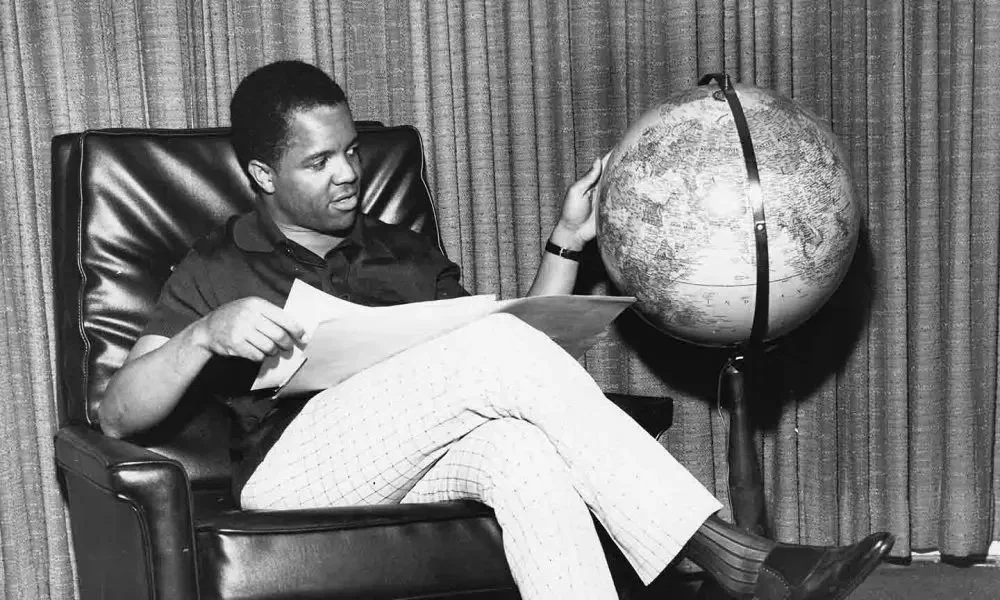
Berry Gordy in 1966. Photograph by Gilles Petard
*An Entertainment Factory, defined by Allmer, produces properties on an industrial scale, with full control over their development and presentation. Two categories exist: the Autocratic Factory (Barnum, Disney, Motown), in which a single mogul's taste dictates the assembly line, and the Institutional Factory (Marvel, Pixar), in which a collaborative system, rather than any individual, ensures the constant output.
The life of Berry Gordy will be visualised in American Portrait through Comic Books and a Feature Film.

